Blog
About
Indices
Films by Title Gateway Cinephile Posts by Date The Take-Up and Other Posts by Date Horror Cinema David Lynch's Shorts John Ford's Silents H. P. Lovecraft Adaptations Twin Peaks: The Return Westworld Freeze Frame Archive
What I Read

Gateway Cinephile

Appreciation and Criticism of Cinema Through Heartland Eyes
Blog
About
Indices
Films by Title Gateway Cinephile Posts by Date The Take-Up and Other Posts by Date Horror Cinema David Lynch's Shorts John Ford's Silents H. P. Lovecraft Adaptations Twin Peaks: The Return Westworld Freeze Frame Archive
What I Read
TheVanishingGrab01.jpg

The Vanishing

1988 // Netherlands - France // George Sluizer // September 6, 2011 // Hulu Plus

[Note: This post contains minor spoilers.]

George Sluizer's disturbing 1988 thriller is a kind of "daylight nightmare," wherein a sunny holiday trip changes into something abnormal and terrifying, all in plain view of scores of witnesses. It doesn't end there, however: The film's protagonist Rex (Gene Bervoets) spends three years thrashing about in this nightmare, where even charming little cafes and quiet country roads take on a fractured and ominous aspect. Thematically, the film zeroes in on the nature of obsession and the destabilizing character of an unresolved mystery, and in this respect it is kin to works as diverse as Picnic at Hanging Rock, The Sweet Hereafter, Zodiac, and The White Ribbon. Unlike those films, which generally assume a more sociological or philosophical approach to the aforementioned themes, The Vanishing is an intensely psychological film. Sluizer approaches the story as two distinct journeys through personal conflict and catharsis. The first concerns Rex, whose anguish over his girlfriend's inexplicable disappearance demands an answer that may not be forthcoming. The second journey is that of Raymond Lemorne (Bernard-Pierre Donnadieu), a sociopath in the guise of a mild-mannered chemistry teacher and family man, who feels that he must act on his homicidal impulses in order to prove something to himself or the cosmos. Eventually, the two men meet and confront one another, but they don't so much interact as ricochet off another, fatefully altering each man's ultimate destination.

The film contains just enough oddness to keep the viewer ever so slightly off-balance about what they are witnessing. Events occur which may or may not be "real," but are presented in such a way that they hint at deeper truths rustling just out of sight. Henny Vrienten's score recalls Howard Shore's early work with David Cronenberg in its reliance on synthesizers that moan and squeal with sinister import. For a film that is essentially bloodless, there is a palpable aura of unsettling sexual and physical peril lurking in nearly every crevice. The fact that Rex is carelessly misogynistic and Lemorne malevolently so subtly colors the film's events, and only adds to the viewer's sense of discomfort. Sluizer cunningly uses his performers and his frame, establishing an uneasiness that silently shrieks a symphony of warning. The much-discussed conclusion, while hardly a "twist ending," is the sort of confounding anti-resolution that adds to the film's pitiless aura of authentic mortal and moral despair.

PostedSeptember 7, 2011
AuthorAndrew Wyatt
CategoriesDiary
4 CommentsPost a comment
DiaboliqueGrab01.jpg

Diabolique

1955 // France // Henri-Georges Clouzot // September 6, 2011 // Hulu Plus

There's a specific kind of thrill to be had in re-discovering a classical-era film one has seen before, but only remembers vaguely, an enjoyment that is somehow distinct from that of a genuine first-time encounter. So it is with Henri-Georges Clouzot's masterpiece, Les diaboliques, which I had seen many years ago, and had become unfortunately entangled in my memory with the 1996 American remake. The remarkable thing about Clouzot's film is how efficient it is in setting up its premise, and then ratcheting up the tension with one uncanny twist and perilous development after another. What's more, Nicole and Christina's scheme is already unfolding when the film opens, and Clouzot does a commendable job of conveying exactly what the women have in mind for the monstrous Michel, all without resorting to stilted dialog. I adore the way that every character in the film save the three principals is presented as vaguely comedic, from the crotchety tenants to the school's faculty, from the drunken soldier to Charles Vanel's oddly insistent retired police detective. Far from being a distraction, the tone of light absurdity serves to heighten the sensation that the women's murderous plot is unraveling and slipping through their hands. Of course, the film's hidden, second-tier story—the gaslighting of a vulnerable woman in order to kill her—is hardly original stuff, but I'm hard-pressed to think of another example that is presented with such lean, nasty potency.

PostedSeptember 7, 2011
AuthorAndrew Wyatt
CategoriesDiary
CommentPost a comment
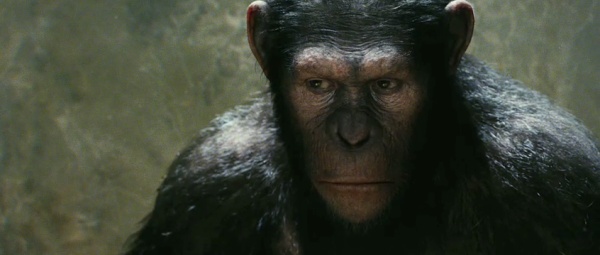
RiseofthePlanetoftheApesGrab01.jpg

Rise of the Planet of the Apes

2011 // USA // Rupert Wyatt // September 3, 2011 // Theatrical Print (AMC West Olive)

As near as I can discern, Rupert Wyatt's Rise of the Planet of the Apes is partly a reboot-prequel to the well-regarded 1968 science-fiction landmark Planet of the Apes, and partly a spiritual remake of that film's less-well-regarded sequel-prequel from 1972, Conquest of the Planet of the Apes. Setting aside the convoluted, essentially distracting matter of the film's status within the wider franchise, however, and what you have is a pretty standard science-fiction action flick. As a finger-wagging fable about humankind's disheartening failures towards its scientific monsters, Rise is meaty, entertaining stuff, a popcorn-movie complement to James Marsh's more sobering documentary Project Nim. Unfortunately, there's plenty of flaws to pick at in this post-Darwin Frankenstein tale. There's the cartoonish simplicity of its heroes and villains, and its lazy re-imagining of the original film's nuclear apocalypse as a corporate biotechnological doom. There's the useless female love interest, the awkward homages to the original film, the sci-fi gobbledegook that strains credibility, and the scads of gaping plot holes.

And yet... The motion-captured performances—including a lead turn from mainstay Andy Serkis as chimpanzee revolutionary Caesar—while plainly computer-generated, are as captivating as any of the work by the flesh-and-blood actors. That's not to dismiss the talents of James Franco, Brian Cox, John Lithgow, and the rest of the ensemble, but it's evidence that digital performances have reached the point where they can be downright absorbing in their own right. (It's also evidence that the human dialog from scripting team Rick Jaffa and Amanda Silver might be part of the problem here.) What's most interesting about Rise is how thoroughly its asks us to sympathize with Caesar, and how relatively modest its spectacle ultimately proves to be. Culminating in a stand-off on the Golden Gate Bridge between a SWAT team and a group of fugitive apes bound for the sanctuary of Muir Woods, the film offers but the first few steps in the apes' eventual conquest of Earth. It's a visually invigorating climax, but qualifies as but one encounter in a larger origin story, rather than a genuine turning point in the war between hairy ape and less-hairy ape.

PostedSeptember 7, 2011
AuthorAndrew Wyatt
CategoriesDiary
CommentPost a comment
TreeofLifeGrab03.jpg

The Tree of Life

2011 // USA // Terrence Malick // September 1, 2011 // Theatrical Print (Landmark Tivoli Theater)

I first encountered The Tree of Life four months ago, and given the primacy of the parent-child relationship in Terrence Malick's lauded film, part of me assumed that revisiting the film following the birth of my son would permit me to appreciate it in fresh ways. And, truth be told, the affecting quality of the film's suburban Waco scenes was intensified, if only because I found myself reflecting that much more intently on the ways in which my wife's and my outlook will inevitably mold our son's character. Young Jack's matter-of-fact statement of his revelation to his father, "I'm more like you than her," is an expression of the narrative nucleus of the Waco sequences. Indeed, the importance of this declaration is the reason that the last year of the O'Brien's residency in the little corner house figures so prominently in adult Jack's reverie. The pivotal events from that time period—the death of a local boy in a public pool, Jack's theft of a neighbor's lingerie (and possible first masturbatory experience), Jack's shooting of his brother with a pellet gun—all lead in some way to Jack's revelation that he is his father's son, i.e. more a spirit of Nature than Grace.

In addition, there were details that I caught on my second go-around that deepened my appreciation of the film. For example, the context of the more perplexing imagery early in Jack's memories—such as the children following a woman through a forest, or a boy swimming through a drowned house—makes it clear that what we are seeing is a metaphorical expression of the pre-birth experience. (This, in turn, reinforces my suspicions that the film's final sequences are a highly symbolic conception of the afterlife, or at least the afterlife as Jack hopes it will be.)

In the main, however, my initial impressions, articulated in my conversation with fellow Look/Listen writer Patricia Brooke, were essentially reinforced with a second viewing. I remain fascinated with the pure visual poetry of those extensive Waco sequences, which are realistic while also conveying the disconnected and dreamy quality of half-remembered times. If one considers the depiction of the O'Brien family as a standalone object, I'm tempted to call it the most successful use of Malick's unconventional editing methods (here implemented by a five-person team of editors) in his entire filmography. Jack's memories take on the quality of a collage of moving snapshots, assembled in roughly chronological order. In some ways, the experience of the film is therefore like flipping through a family photo album, with the expected lingering over memories that are especially potent. This approach allows Malick to achieve a glinting, unabashedly nostalgic depiction of a lost American landscape, and yet also infuse it with the sort of melancholy that any journey through an intensely personal past can achieve. In this, the best moments of The Tree of Life share a common character with Terence Davies' superlative documentary memoir, Of Time and the City.

I remain, however, generally unmoved by Malick's joining of Jack's conflicted inner odyssey to cosmological ruminations on the nature of God and existence. I chalk that up partly to my own suspicion of earnestly presented spirituality, and partly to the inadequacy of Malick's method. It's certainly possible to be touched by a work of cinema that expresses a worldview dissimilar to one' own. Heck, Malick's own The Thin Red Line ultimately seems to side (narrowly) with Private Witt's theistic, anti-materialist view of the human experience, which I reject and yet still found deeply affecting. In The Tree of Life, however, while I clearly understood what Malick was trying to achieve with his images of nebulae and jellyfish, I found little resonance in those visuals. Where some have seen a profound expression of vexing philosophical concerns, I see a handsome illustration of a deistic worldview that is self-evidently dead on arrival.

Moreover, the director's decision to expand the scope of his observations beyond the immediate environs of his characters, to encompass all physical reality, seems to have heightened his taste for the grandiose even as it diminished his focus. One of the primary factors that makes his previous films such innovative and entrancing works of cinematic art is how he utilizes the local surroundings to establish an "ecological" narrative that is just as vital as the human-centered narrative. (The former, it should be stated, can consist of human-made environments, such as Days of Heaven's steel mill.) Freed by computer technology to explore the outermost reaches of the cosmos and the innermost workings of a living cell, Malick seems to struggle a bit more to connect his images back to the O'Briens and Jack's inner turmoil. For me, the paradox of The Tree of Life is that Jack's memories have a palpable aura of the sacred, while the film's visions of spinning galaxies and stalking dinosaurs strike me as somewhat antiseptic. They effectively remove me from the embrace of the cinematic experience rather than providing a macroscopic counterpoint to Jack's story, which strikes me as the opposite of the intended effect.

PostedSeptember 7, 2011
AuthorAndrew Wyatt
CategoriesDiary
CommentPost a comment
AnotherEarthGrab01.jpg

Another Earth

2011 // USA // Mike Cahill // August 12, 2011 // Theatrical Print (Landmark Theaters Tivoli Theater)

​Another Earth is speculative science fiction stripped down to its most essential characteristic: The employment of scientific principles as a plot device in order to explore the philosophical facets of an otherwise human-centered narrative. In the case of Mike Cahill’s subtle, intriguing little film, the "science" in question is of the thinnest and most fantastical sort. A twin Earth has appeared in the sky, and over the course of the film this doppelganger planet looms larger and larger, all without any apparent gravitational effect on our Earth. Naturally, such a conceit makes zero sense from an astronomical standpoint, but Another Earth is really a flirtation with the fuzzier quasi-scientific notion of parallel universes. When the director of SETI makes first contact with “Earth 2” on a national television broadcast, she quickly discovers that she is talking to another version of herself. Members of a New England family watching this exchange from their living room give voice to the viewer’s probable reaction: “I don’t understand--What does that mean?”

This is lofty stuff for a low-budget indie. Cahill and lead performer / co-writer Brit Marling have neither the means nor the interest to peer in on the urgent White House meetings and radical research projects that such a miracle would engender. Like Signs and Spielberg’s War of the Worlds, Cahill's film assumes a ground-level viewpoint for its extraordinary events. In this case, our witness is Rhoda (Marling), an MIT-bound astrophysics student whose life becomes entwined with that of the twin planet on the eve of its first appearance. Craning to catch a glimpse of this new celestial orb while speeding home from a night of drunken revelry, Rhoda collides with a car carrying a family of three, killing the young son and wife of a Yale musicologist, John (William Mapother). Four years later, a private spaceflight company is arranging the first manned mission to Earth 2, just as Rhoda is paroled from a manslaughter sentence. Adrift and addled with guilt, she tracks down John in order to ask for forgiveness, but loses her nerve at the last minute. Through a series of misunderstandings and deceptions, she then finds herself working as John’s house cleaner, and the two eventually form a guarded but much-needed friendship. In the meantime, Rhoda enters an essay contest to win a seat on the voyage to Earth 2, a hopeful act that not only speaks to her childhood yearning for the stars, but also her pained curiosity about a universe in which her life followed a different course.

One doesn’t need a compass and protractor to see where this is going: Rhoda and John realize that they are falling in love right around the time that Rhoda wins the aforementioned contest, much to her (but not the audience’s) astonishment. Strictly as a narrative about remorse and absolution, Another Earth is pretty standard indie drama material—more Sundance than Solaris, if you will. The film blunders into eye-rolling cliché at times, e.g. an elderly janitor who serves no purpose other than to reflect Rhoda’s despair and to periodically mumble half-baked wisdom. Fortunately, the science fiction angle to the story saves Another Earth from its own conventional outlines. Rhoda’s tribulations are unquestionably the focus of the film, but Earth 2 is always there, filling every exterior shot with the sheer impossible fact of its existence and thereby coloring the terrestrial proceedings. As it happens, this also allows for some glorious visuals of the second Earth against an azure sky, including a shot that explicitly evokes La Jetée / Dark City / Twelve Monkeys. (Such hyper-real daylight imagery contrasts sharply with the smeary grain that Cahill’s digital video lends to the nocturnal scenes.)

The film’s budgetary constraints end up enhancing the uneasy tone: The planetary double, which resembles the famed Apollo 17 “Blue Marble” photo pasted into in the sky, never seems to rotate or exhibit changes in its weather, making it seem less a solid place than a portal to another reality. Adding to the film’s uncanny sense of dislodgment is the occasional voiceover narration from real-life physicist Richard E. Berendzen, who speculates poetically on the implications of parallel universes and life on other planets. Far from over-explaining the phenomenon of Earth 2 with unwelcome, pseudo-scientific gobbledygook, Cahill and Marling leave nearly all the technical details unexplored. Instead, they allow snippets of possibility to seep into the minds of the characters (and the audience) from overheard television and radio programs, where experts pontificate on various theories about Earth 2. This adroit, minimalist use of science is what allows the film’s abrupt conclusion to function so well, despite the howls of confusion and anger that it will no doubt prompt from some viewers. What Cahill offers with Another Earth is, in a sense, the fundamental feat of all thoughtful science fiction: The deepening of an otherwise musty story not through smash-bang spectacle, but through Big Ideas plucked from the cosmos itself.

PostedAugust 16, 2011
AuthorAndrew Wyatt
CategoriesDiary
5 CommentsPost a comment
ProjectNimGrab01.jpg

Project Nim

2011 // UK - USA // James Marsh // August 12, 2011 // Theatrical Print (Landmark Theaters Plaza Frontenac Cinema)

Numerous thematic angles present themselves for exploration in the tale of Nim Chimsky, the male chimpanzee who was taught American Sign Language as a part of a contentious Columbia University language experiment in the 1970s-80s. James Marsh’s new documentary feature, Project Nim, emphasizes the colorful characters associated with the experiment, as well as the moral conundrums that swirl around the chimp’s treatment, often to the exclusion of the story’s academic context and ramifications. How the experiment fit into the then-contemporary research landscape of linguistics and cognition is not touched upon. However, the film ably reveals the ad-hoc resourcefulness and suspect ethics that characterized the project’s day-to-day routine. From these details, a picture emerges of a research project which was seemingly blessed with resounding success, despite its disorganization and soapy conflicts. Nim’s signing vocabulary is envisioned as a line that climbs ever upward, representing the remarkable progress of a bevy of teachers, all working under the eye (and thumb) of psychology professor Herbert Terrace. However, Project Nim clearly signals through its stylistic particulars that its aim is not a celebration of the titular chimp’s intellect, but a fairly grim condemnation of the human participants.

Marsh relies upon archival materials and recreations to supplement extensive interviews with the academics and caretakers who interacted with Nim on a regular basis. The director allows his subjects to tell Nim’s story in their own words, but hardly anyone (save the chimpanzee) emerges looking particularly honorable, least of all Terrace, who projects a tweedy sort of exploitative arrogance. This suits the film’s purpose well enough, as Project Nim isn’t striving for a work of explanatory journalism or a profound rumination on language. What Marsh presents is a disconcerting tragedy about humankind’s relationship to a wild animal that it psychologically sculpted for woolly scientific ends. The film’s central criticism of the experiment only becomes evident after the project’s funding evaporates and Nim becomes too large and aggressive for the researchers to handle. The once-renowned ape is then shuttled to a succession of unpleasant confinements and abusive environments, culminating in the horrors of an NYU medical testing facility. It's all presented for maximum pathos, sometimes manipulatively so, but Marsh is not aiming for anything as prosaic as a work of animal right agitprop. The specificity of the film is the key to its emotional and moral strength. Project Nim poses that the experiment altered Nim’s development, rendering him unfit to abruptly re-enter a caged existence with his fellow chimps. While steering clear of righteous snottiness, Marsh unambiguously presents Nim’s plight as the direct result of unmet human obligations. That Nim was subject to a litany of psychological and physical abuse after he outgrew his usefulness is framed as an unforgivable disgrace, and justly so.

PostedAugust 15, 2011
AuthorAndrew Wyatt
CategoriesDiary
1 CommentPost a comment
Newer / Older
RT_CRITIC_TM_BADGE.jpg
The Take-Up Podcast

Twin Peaks: The Return

2007 - 2016: A Personal Cinematic Canon

download.png

Recent Posts

Blog
New Reviews at The Take-Up
about 8 years ago
Miles to Go Before I Sleep
about 8 years ago
Delete Your Account: 'Friend Request'
about 8 years ago
Feminine Mystique: 'mother!'
about 8 years ago
Unmuffled Screams and Broken Hearts - 'Twin Peaks: The Return,' Parts 17 and 18
about 8 years ago
Send in the Clown: 'It'
about 8 years ago
Unmuffled Screams and Broken Hearts - Twin Peaks: The Return, Part 16
about 8 years ago
Fetal Infraction: Prevenge
about 8 years ago
You Don’t Know Why, But You’re Dying to Try: The Lure
about 8 years ago
Unmuffled Screams and Broken Hearts - Twin Peaks: The Return, Part 15
about 8 years ago

© 2007 – 2026 Andrew Wyatt