Blog
About
Indices
Films by Title Gateway Cinephile Posts by Date The Take-Up and Other Posts by Date Horror Cinema David Lynch's Shorts John Ford's Silents H. P. Lovecraft Adaptations Twin Peaks: The Return Westworld Freeze Frame Archive
What I Read

Gateway Cinephile

Appreciation and Criticism of Cinema Through Heartland Eyes
Blog
About
Indices
Films by Title Gateway Cinephile Posts by Date The Take-Up and Other Posts by Date Horror Cinema David Lynch's Shorts John Ford's Silents H. P. Lovecraft Adaptations Twin Peaks: The Return Westworld Freeze Frame Archive
What I Read
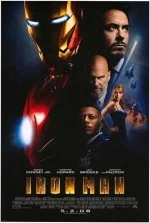
IronManPoster.jpg

Iron Man

2008 // USA // Jon Favreau // May 4, 2008 // Theatrical Print​

B - Entries in the superhero genre have been coming fast and furious lately. Lamentably, for every adaptation that conveys thrills, humor, and heart in an artful way, a slug of forgettable nonsense or outright dreck comes down the studio pipe. Arriving at the bleeding edge of a densely packed summer action film season, Jon Favreau's Iron Man is the latest attempt to breathe twenty-first century cinematic life to a seminal character. The film certainly hits all the right notes for its source material, but it occasionally stumbles into the usual action film sins: predictability, ridiculous dialog, and trite character development. Yet despite these flaws, Iron Man emerges as a delicious work of modern techno-fantasy, and reveals Favreau as an action director of generous skill.

>I never read the Iron Man books back in my hardcore comic fandom days, but the story is familiar to anyone devoted to the Marvel Universe. Anthony Stark, wealthy defense industrialist, constructs a wondrous metallic suit that gives him the ability to soar like a fighter jet, withstand bullets, and unleash a dizzying arsenal of weapons. Fortunately for the residents of the Marvelverse, Stark uses his power armor to serve goodness and justice. It's hard not recognize the archetype-bending appeal of such a character for the Popular Mechanics set. The Smith forges the Sword and, rather than bestowing it on the Hero, becomes the Hero himself. Stark is both a brilliant engineer and fabulously rich. In other words, he is just the sort of eccentric with the talent and resources to turn himself into a superhero as an act of sheer will.

Unlike the wealthy, technology-dependent superhero from that other comic universe, however, Stark's Road-to-Damascus moment is less about personal grief than a humanitarian epiphany, at least as envisioned by Favreau. When Iron Man opens, Stark is already settled into an adolescent-minded middle age. He leads a charmed life filled with computerized comfort and an endless succession of beautiful women. While the Tony Stark of the comics might have been an asshole prior to taking up the superhero mantle, Robert Downey Jr. also adds plenty of his trademark lightning-witted charm. It's a vital and perceptive addition to the character. We want to see the spoiled, negligent Stark receive his comeuppance for his years of bloody war profiteering, but Downey's charisma also ensures that we long for his conversion to heroism.

While demonstrating his company's new missile in Afghanistan, Stark is caught in a convoy ambush and captured by a local warlord. The attack leaves Stark with shrapnel embedded in his chest, fragments that will work their way into his heart over time. That is, they would without the powerful electro-magnet—powered by a car battery—that was hastily installed in his chest by his doctor cellmate, Yinsen (Shaun Toub). Stark's reputation has preceded him to the mountains of Afghanistan. The warlord, Raza (Faran Tahir), knows exactly who he has captured, and he orders Stark to construct a duplicate of his company's new missile using spare parts and scrap.

This is roughly where any lingering believability goes out the window. This is a comic book movie, however, and Favreau and Downey both display a talent for rendering absurdities in a giddy, compelling way. Using missile parts, Stark recreates his company's "arc-reactor" in miniature, a sort of perpetual motion energy source to replace his crude life-sustaining device. He and Yinsen then labor to build a means of escape, a suit of robotic armor powered by that same arc-reactor. Makes sense, right? It's the sort of ludicrous leap that seems perfectly sensible within a comic book reality.

I'm not spoiling much by revealing that Stark eventually flees the Afghanistan caves with the aid of his prototype suit. His captivity has changed him. Publicly, Stark abandons his flippant jingoism, resolving that he is morally culpable for the destruction wreaked by his company's weapons. The rest of the film mainly revolves around Stark's ambition to develop a refined version of the suit in his engineering lab, and the complications and opposition he encounters when he deploys it in the service of a private, righteous war. He is forced to fend off concern and suspicion from his allies: capable personal assistant Pepper Potts (Gwenyth Paltrow), friend and Air Force liaison Jim Rhodes (Terrence Howard), and Stark Industries executive Obadiah Stane (Jeff Bridges).

Favreau mostly sticks to the established superhero origin formula. He doesn't do much that's surprising with it, but he often does it with a kind of high-octane grace that's enviable. What he does exceptionally well is shoot and edit his action sequences with an eye for beauty, coherence, and drama. It's an all-too-rare skill, and to see a comedy director like Favreau rise to the occasion is... well, impressive isn't the right word. It's thrilling. Not momentous, mind your, in the sense of an auteur's breakout film, but it nonetheless inspires excitement about the future of action cinema under Favreau's hand.

Iron Man's visual effects are quite remarkable, and they expertly serve to suck the viewer into its glossy reality. It's easy to accept the film's technological hand-waving when old school effects and computer wizardry blend together so seamlessly. Favreau expertly taps into the visual wonder of his story's science fiction foundation, never gaping with his camera, but coaxing the viewer to gape. This is a vital distinction.

Although Favreau generally raises the stakes in terms of the action, he works by the numbers in most other respects. There's a blossoming love interest, a secret betrayal, a climax dependent on vague technological tension, and so on. The dialogue is fairly groan-worthy in places, although to his credit, Downey works his wry magic on all of his lines, no matter how silly. The supporting cast is really in place to convey broadly drawn personas, and they're serviceable enough in this respect. Unfortunately Favreau commits other screenwriting offenses, such as introducing plot points and then abandoning them, and going adorable when he has no right to.

Iron Man feels like a middling superhero movie in some ways, but it's hard to disregard the ways that it is exceptional. Favreau strikes a careful balance between gleeful, engrossing action sequences and an empathic exploration of his protagonist's transformation. The filmmakers never fully explore the intriguing themes that the story begs, particularly the righteous elitism and technocrat-warrior impulses in Stark's character. These elements just sort of glide beneath the surface of the film, acknowledged but never truly engaged. Still, such subtle nods seem like virtues when I imagine the soulless exercise that Iron Man could have been in the hands of a lesser director. And, to be fair, the story of Iron Man doesn't require the operatic intensity of, say, Batman. Rather, it taps into the technophile's lust for powerful and shiny toys, accented with twinges of American guilt and compassion. Favreau—and Downey—accomplish this tone so precisely, I can't quibble too much with the film's tendency to stick to superhero movie conventions.

PostedMay 6, 2008
AuthorAndrew Wyatt
CategoriesReviews
1 CommentPost a comment
DuchessofLaneaisPoster.jpg

The Duchess of Langeais

2007 // France - Italy // Jacques Rivette // April 26, 2008 // Theatrical Print

D - The Duchess of Langeais brings to mind a fundamental question about film quality: Can a movie be reasonably well-shot and well-acted in the service of Very Serious Themes, and yet still be a dull, dreadful mess? Are the two mutually exclusive? Last year, Pascale Ferran's Lady Chatterley, a film that seems increasingly like a fumbled embarrassment with the passage of time, suggested that the two aspects could coexist in the same film. Now here is another French adaptation of a revered author's work that evokes a comparably contradictory sensation. In this case, the author is Honore de Balzac, and the director is New Wave icon Jacques Rivette. I have a hard time calling this a Bad Film, but it is almost certainly a failure. If I squint very hard I can almost be convinced of the phantoms of an engaging work, and maybe even understand—but not share—the praise that this film has received from my admired critics such as Glenn Kenny and Noel Murray. Yet I can't lie to myself: I just don't see it.

The film opens in the early nineteenth century. Guillaume Depardeiu—son of, yes, that Depardieu—portrays Armand de Montriveau, a French officer on a diplomatic visit to Spanish Majorca. While listening to a cloistered order of nuns sing at a local convent, Armand is overcome with emotion at the sound of one sister's voice. It is the sound of a woman he knows, a woman that has haunted him for years. Armand makes arrangements to confront the nun and confirm his suspicions, and the film then returns to their first meeting, a flashback that will comprise most of the film. The melodious nun was once Antoinette de Langeais (Jeanne Balibar), a comely Duchess wed to a man the viewer never meets. She moves through the splendor of Parisian aristocratic society, sly and moody and slender as a statue. At an evening ball, she chances upon Armand, a wounded war hero recently returned from exploits in the heart of Africa.

There is attraction. She is intrigued by this worldly man, rougher than the powdered gentility she is accustomed to. And although initially standoffish, Armand is quickly and completely smitten with her. Unfortunately there is a disparity of passion and a cultural gulf in their relationship that leads almost immediately to frustration and conflict. Armand is forthright and savage in matters of the heart. He declares on the first night that he loves Antoinette, begging (and later demanding) that she reciprocate his affection. Antoinette is flighty, alternately preoccupied with coquettish games, social propriety, and religious guilt. These people, however strong their attraction might be, are not likely to share a happy ending.

It's a challenge to detect anything instructive or even coherent in the way that Armand and Antoinette behave. Rivette approaches the cruel game of the relationship is a way that is unaccountably distant, shapeless, and meandering. Despite the film's apparent interest in the monstrous character of aristocratic gamesmanship, the viewer doesn't see much of that world, or the evidence of its immorality. Too much of this film consists of Depardieu and Balibar alone together, urgently delivering lots and lots of obtuse and mannered dialogue. The dialogue isn't awful, per se. On the contrary, it's often quite poetic. It's just unfocused, rambling, and far less torrid than it imagines. I had difficulty discerning the characters' motivations from moment to moment, save for the plainest and most understandable impulses. (Armand's frustration at Antoinette's dithering at least evokes some sympathy.)

Don't misunderstand: the performances are fine enough. Depardieu in particular displays a flair for conveying Armand's strange blend of longing and loutishness. And that's another problem. Armand is a thick-headed, sadistic, selfish brute, while Antoinette is a creepy, maladjusted, juvenile flake. I'm supposed to care if such people find love together?

The most frustrating facet of The Duchess is that while it reveals scattered flashes of delicious drama, these moments never culminate in anything that justifies the heaping helpings of blandness. It's not a good sign when the film's most powerful emotional moment occurs ten minutes into its running time. Rivette finds little nodes of electricity here and there that hint at his august and allegedly potent cinematic storytelling talent. (This is my first of his films.) When a vengeful Armand ominously and obliquely warns Antoinette at another ball, "Don't touch the axe," the viewer begins to feel her rising, clinging dread. There are some juicy twists to the plot, but these seem oddly diminished in their impact due to the film's overall ambivalence about its characters' virtues or the cruelty of their circumstances. By the time the bitter irony of the film's ending is revealed, my empathy with anything going on up on the screen had long expired.

To the credit of the filmmakers, The Duchess is a gorgeous film. The sets and costumes are all richly detailed, giving off just the right glow of dazzling beauty and moribund excess. I should also point out that Rivette and cinematographer William Lubtchansky exhibit an uncommon skill: they know how to light period interiors in a manner that is utterly authentic. I can't think of a film in recent memory with such a convincing shroud of pre-Industrial gloom. Now that I've said something nice, can I talk for a moment about the irritating sound design? I'm not sure what possessed Rivette to highlight every single creak in the floorboards when any character takes a step. Is this a metaphor for the warped and incessant character of French aristocratic society? All I know is that twenty minutes in, with the creaking actually obscuring the dialogue, I wanted to slap him.

At best, The Duchess of Langeais is a visually exciting muddle that aims high and falls flat. It's really the French literary equivalent of a big, dumb, superhero movie, and that's mighty disappointing. Want to see a masterpiece about the institutionalized malice of aristocratic society? Do yourself a favor and rent The Age of Innocence instead.

PostedApril 28, 2008
AuthorAndrew Wyatt
CategoriesReviews
CommentPost a comment
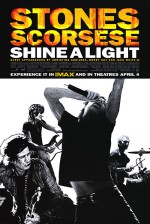
ShineaLightPoster.jpg

Shine a Light

2008 // USA //  Martin Scorsese // April 12, 2008 // IMAX Theatrical Print

B - Martin Scorsese's Shine a Light, depicting a two-night Rolling Stones performance at the Beacon Theater, aims for something a little higher than mutual artistic backslapping, just not much higher. This is Stones worship at its purest, but that purity is fairly stunning. The undisciplined tendency that has at times infected Scorsese's more recent dramatic work is nowhere to be found in this endeavor. If nothing else, Shine a Light is a work of cinematic virtuosity. Shot with plethora of cameras placed jaw-droppingly close to the action, it boasts an intimacy that vividly captures the Stones' everlasting fire and their sheer joy at performing. It's dizzying to contemplate the challenge that this film must have been to edit. Scorsese doesn't strive for the genuine exploration of Gimme Shelter, but he does utilize the medium to discover something akin to a live concert experience, yet also something different and distinctly cinematic. Shine a Light has an undeniable and sustaining energy, but there's not much to it other than great music from artists you'll never be this close to again. If that's enough for you—and it should be—you'll regret missing an opportunity to catch it in IMAX.

PostedApril 13, 2008
AuthorAndrew Wyatt
CategoriesQuick Reviews
CommentPost a comment
TheCounterfeitersPoster.jpg

The Counterfeiters

2007 // Austria - Germany // Stefan Ruzowitzky // April 10, 2008 // Theatrical Print

C - The Counterfeiters presents the morally knotted tale of Operation Bernhard, the Nazis' effort to reproduce the British pound using Jewish counterfeiters. The film centers on the experience of master counterfeiter Salomon Sorowitsch, portrayed with grim precision by Austrian actor Karl Markovics. Like most capable dramas about World War II, the film treads a satisfactory balance between the shorthand characterization necessary for a feature length production and pockets of richer exploration. Director Stefan Ruzowitzky never works any real cinematic magic, but he does the minimum the material deserves by telling a fascinating story quite well. The counterfeiters' surreal existence as valuable but despised craftsmen is the story's most appealing angle, but it remains somewhat underdeveloped in favor of stock dramatic tension and twists. Ruzowitzky finds some intriguing approaches here and there, as when he highlights the fractures between subgroups within the Jewish prisoner population (habitual criminals, Communists, etc.) Still, there's something more than a little disappointing about a film where the concept is more electric than the execution. In the end, The Counterfeiters is a notable addition to the swelling body of Holocaust dramas, if only for its unusual subject matter and fine performances.

PostedApril 13, 2008
AuthorAndrew Wyatt
CategoriesQuick Reviews
CommentPost a comment
ParanoidParkPoster.jpg

Paranoid Park

2007 // France / USA // Gus Van Sant // March 25, 2008 // Theatrical Print

A - Director Gus Van Sant, now in his mid-fifties, is enraptured with the psychology of young people. There are few living American filmmakers as unflinching and unabashed in their artistic curiosity towards the teenaged or young adult mind. Van Sant's new film, Paranoid Park, is more than a reaffirmation of this impulse: it may be his most gently ambitious and conscientious work to date. The film hums with a jumbled, embryonic sensibility that is strangely effective, and often outright devastating. Van Sant's tangled approach inherently precludes the dramatic ferocity that might have made Paranoid Park a legacy knockout. That said, what the film offers is a valuable, pained glimpse into the adolescent heart of darkness, realized with visual and aural audacity.

Alex (Gabe Nevins) is a doe-eyed Portland, Oregon high school kid who drifts through the fringes of that city's skateboarding culture. His separated parents are nearing an inevitable divorce. His possessive girlfriend is pressuring him to take her virginity (and soon). School is a bore, and skating is the only thing that holds any interest for him.

Something has happened to Alex, Something Bad. This event compels him to scratch out his memories and reflections in a notebook, and it is these writings that he narrates in a halting voice-over. Paranoid Park is a snarled and meandering film, and by necessity. Alex is telling his own story, and as the kid freely admits, he didn't do so well in his creative writing class. We sense that he has difficulty organizing and articulating his thoughts even under normal circumstances. In relating the Bad Thing that happened one Saturday night near an illegal skate park, he can barely find his footing. He glosses over significant events, skips around in the chronology, backs up and begins again. His disjointed story is part confession, part therapy, part act of creative defiance.

If Paranoid Park were a straightforward mystery, this stuttering structure might feel cheaply affected and exasperating. Fortunately, Van Sant has created something far more penetrating and determined. This is pensive psychological drama in the fullest sense of the term. Crucially, the nature of the traumatic event in Alex's tale is revealed at the film's halfway point, and yet it is not a deflating moment. Van Sant crisply conveys that Paranoid Park is not about the event, but about Alex's understanding of and responses to it.

The film establishes its interest in the inner world quite literally. Van Sant maintains the focus on Alex in shot after shot. Few directors are confident enough to linger on their protagonist in silent close-up for sixty seconds or more, permitting the camera to search and wonder at what lies behind their eyes. Van Sant often deliberately underlights Alex, capturing him as he ambles or sulks within gray-yellow shadow, evoking a twilight melancholy and menace. The director also splices in skateboarding footage, much of it shot in raw 8mm, to suggest Alex's state of mind, whether wistful, sullen, or obsessive.

Characters wander into Alex's field of vision and ours. The adults in his world are frequently off camera, off-center, or out of focus, only snapping into clarity when he shifts his attention to them. Characters speak but he does not hear. One exception is a police detective (Daniel Liu), whose penetrating eyes and cunning questioning unnerve Alex. What does he know, and what does he suspect? Nothing, Alex's skater friends reassure him. Yet they know even less.

Most of the young actors in Paranoid are unpolished and naturalistic. Nevins' performance is slightly more studied, but it feels remarkably real in its awkwardness. When he intones, "There's different levels of stuff" in all seriousness, we're seduced by the convincing, twisted-up apprehension in such an adolescent faux-insight. There are acting misfires, however. Taylor Momsen as Alex's girlfriend Jennifer, and Lauren McKinney as his sort-of friend Macy don't find the same tone as the other performers. Momsen is far too calculated, as though she stepped out of a mainstream teen comedy. McKinney, meanwhile, taints her lines with a self-conscious quality that is distracting.

Paranoid Park lacks a climax or even a clear resolution. The film offers a cathartic release that is more whimper than bang. There's something a bit soggy and forced about the enterprise that prevents the film from congealing into a true landmark for youth film. I can only describe this problem as a half-hearted striving for accessibility. (The over-the-top intolerability of Jennifer comes to mind as an example of this disappointing tendency.) This inclination contrasts with Paranoid Park's otherwise stunning insistence on a daring, credible vision.

These are minor quibbles in tone, however. I left the theater musing that Paranoid was a lesser cousin compared to the searing, unblinking glare of Van Sant's Elephant. Now that I've had a day to ruminate on it, I believe this latest film is not only more obviously compassionate, but also a richer and more maturely motivated work. It's rare for a tale of teen angst to achieve the haunting qualities of Paranoid Park without a parting sucker punch. Here Van Sant wallops us in the middle and then lets Alex and us spend the next hour—indeed, the rest of our lives—getting our breath back.

PostedMarch 26, 2008
AuthorAndrew Wyatt
CategoriesReviews
CommentPost a comment
TheBandsVisitPoster.jpg

The Band's Visit

2007 // Israel - USA - France // Eran Kolirin // March 22, 2008 // Theatrical Print

B - Eran Kolirin's The Band's Visit is a film as light as meringue, but with a rich, complex flavor. It rests on the well-worn comedic premise that strangers trapped together in one location invariably provide insight and wisdom to one another. One might term this rule the "Breakfast Club principle" and the films that follow it "anti-road comedies." In this case, an Egyptian police band finds itself stranded in a backwater Israeli village for one memorable night. Although the story sticks close to the traditional fish-out-water formula, Kolirin's insightful and nuanced thematic layering adds up to something more rewarding. The resulting film is unexpectedly dense, lovingly rendered, and occasionally laugh-out-loud hilarious.

Owing to confusion over a Hebrew name, the Alexandria Ceremonial Police Orchestra mistakenly catches a bus to a dusty town lacking even a hotel (although it does have a tiny roller disco). The band has a performance scheduled for the following day at a nearby city's Arab Cultural Center. No buses will arrive until the morning, however. They're effectively marooned with nothing to their names other than their crisp, sky-blue uniforms and their beloved instruments. Kolirin's characters fit into familiar archetypes, making this English-Hebrew-Arabic tale easy to follow, if a bit formulaic. The musicians include the severe, patriarchal conductor, Tawfiq (Sasson Gabai), the glum would-be-composer, Simon (Khalifa Natour), and the rash lothario, Haled (Saleh Bakri). The villagers they encounter encompass an alluring restaurant owner, Dina (Ronit Elkabetz), an unemployed family man, Itsik (Rubi Moskovitz), and a hopelessly awkward youth, Papi (Shlomi Avraham).

Fortunately for the hapless band, Dina is a generous soul. She offers up sleeping space for the stranded musicians at her restaurant, her apartment, and Itsik's home (despite his objections). Over the course of the evening, little dramas and amusing sketches unfold. Most of the musicians make themselves as unobtrusive as possible, while a few vainly wander the village in search of entertainment. It's fairly easy to anticipate how the various personalities will collide. Vigorous as a greyhound and sensual as a desert cat, Dina is an obvious foil for humorless Tawfiq, and naturally she starts chipping away at his stiff demeanor. Naturally, Simon and Itsik throw one another's failings and fortunes into perspective. Naturally, a smooth operator like Haled gives Papi some pointers on the art of seduction.

For the most part, The Band's Visit clicks into place like a smooth, shiny edifice of Lego bricks. On the surface, there's nothing subversive or exceptional in its components, but as a gratifying comedy its execution is essentially flawless. Consider one memorable scene in a roller disco involving Haled, Papi, and the girl the latter hopes to woo. The scene--captured in one long, ambitious shot--is so broad that it might have been plucked from a Mr. Bean sketch. However, the performances are so perfect that I found myself helplessly smiling, then giggling, then bursting with laughter. Kolirin and his actors have an astonishing sense of comedic timing. Furthermore, they often add a wounded, sympathetic element to characters that might have otherwise been one-note.

The Band's Visit could have been as sweet and forgettable as chewing gum, but Kolirin's script and direction masterfully add intricate subtext with economical strokes. The Israeli-Palestinian conflict--and by extension Jewish-Muslim antagonism--is never far from mind, but Kolirin isn't much interested in browbeating his audience, or in projecting geopolitics onto a personal story. (One blackly humorous exception concerns a musician and villager who wordlessly, ominously clash over the use of a pay phone.) Kolirin's touch is generally softer, and his ambitions broader. The Band's Visit alights on several dichotomies: urban and rural, tradition and liberality, utility and beauty. Fortunately, the film never feels overextended or aimless. Kolirin demonstrates remarkable talent in bestowing authentic thematic density on a tale as artificial as Nutrasweet. In short, he makes the contrived feel real.

The performances in The Band's Visit are quite good, never deeper than they absolutely need to be, but always unerring in tone. The natural standouts are Gabai and Elkabetz, who take command of the film's heart as Tawfiq and Dina. Gabai renders Tawfiq with the sort of empathetic care that should put most American comedic actors to shame. He knows exactly when to add a second of throat-closing hesitation in the conductor's responses, exactly how to blink, glance, and purse his lips to convey the man's starched and pressed emotional landscape. Elkabetz, all frizzed black hair and huge, heavy-lidded eyes, is almost unnaturally seductive--a perilous mirage--but her allure is all the stronger because the actress sells it so effectively. Dina's cosmopolitan, liberated nature repels as often as it attracts, and puts her at odds with her dismal, conservative environs.

The Band's Visit is sweet and sentimental, and a tad conventional in places. Nonetheless, it serves up a satisfying helping of sincere laughs, and discovers some justly touching moments. Refreshingly, the film is free of the pompous melodrama that afflicts most road comedies and anti-road comedies. Moreover, Kolirin is skilled at detecting the complicated, humane pulses in seemingly cartoonish characters. His is a comedic filmmaking talent to watch carefully. In the meantime, I suggest enjoying The Band's Visit for what it is: a savory confection to share with the people you care for.

PostedMarch 25, 2008
AuthorAndrew Wyatt
CategoriesReviews
CommentPost a comment
Newer / Older
RT_CRITIC_TM_BADGE.jpg
The Take-Up Podcast

Twin Peaks: The Return

2007 - 2016: A Personal Cinematic Canon

download.png

Recent Posts

Blog
New Reviews at The Take-Up
about 8 years ago
Miles to Go Before I Sleep
about 8 years ago
Delete Your Account: 'Friend Request'
about 8 years ago
Feminine Mystique: 'mother!'
about 8 years ago
Unmuffled Screams and Broken Hearts - 'Twin Peaks: The Return,' Parts 17 and 18
about 8 years ago
Send in the Clown: 'It'
about 8 years ago
Unmuffled Screams and Broken Hearts - Twin Peaks: The Return, Part 16
about 8 years ago
Fetal Infraction: Prevenge
about 8 years ago
You Don’t Know Why, But You’re Dying to Try: The Lure
about 8 years ago
Unmuffled Screams and Broken Hearts - Twin Peaks: The Return, Part 15
about 8 years ago

© 2007 – 2026 Andrew Wyatt