Blog
About
Indices
Films by Title Gateway Cinephile Posts by Date The Take-Up and Other Posts by Date Horror Cinema David Lynch's Shorts John Ford's Silents H. P. Lovecraft Adaptations Twin Peaks: The Return Westworld Freeze Frame Archive
What I Read

Gateway Cinephile

Appreciation and Criticism of Cinema Through Heartland Eyes
Blog
About
Indices
Films by Title Gateway Cinephile Posts by Date The Take-Up and Other Posts by Date Horror Cinema David Lynch's Shorts John Ford's Silents H. P. Lovecraft Adaptations Twin Peaks: The Return Westworld Freeze Frame Archive
What I Read
MongolPoster.jpg

Mongol

2007 // Russia - Germany - Kazakhstan // Sergei Bodrov // July 6, 2008 // Theatrical Print

C - Mongol is far too mediocre a film, given its ambitions. It purports to be "The Untold Story of the Genghis Khan's Rise to Power". Whether this tale of the man who would be Genghis—here still called Temudjin—was truly "untold" until now or just unfamiliar to Western audiences, I can't say. Regardless, it's clear that director Sergei Bodrov wants his film to be a grandiose period epic in the vein of Braveheart or Gladiator, with all the cheesy mythologizing that entails. Yet even in this, Mongol stumbles. The film's luscious look and generally warm, mature treatment of its characters can't conceal the incoherence or tedium of its story. Furthermore, Mongol delivers almost no fresh insight into one of history's Great Men, a nagging flaw in light of how forcefully the film trumpets its "untold" character.

In the opening scenes of Mongol, we are permitted a brief glimpse of an adult Temudjin (Tadanobu Asano) as a haggard prisoner, before we whipsaw back to the Khan's childhood. The young Temudjin (Odnyam Odsuren) and his father (Ba Sen) journey to meet with a rival clan, from which the boy is supposed to select his future bride and seal a sorely needed alliance. While under the hospitality of a weaker clan, however, Temudjin jumps the gun and chooses a local girl, Börtee (Bayertsetseg Erdenebat), who incidentally egged the boy into his hasty bit of defiance. This decision echoes throughout the rest of the film, but of more urgent concern is yet another clan's fatal poisoning of Temudjin's father. A kinsmen uses the opportunity to seize power and Temudjin's herds. Mongol tradition apparently forbids the traitor from slaying the boy outright, so he enslaves Temudjin and vows to execute him when he reaches adulthood.

This pretty much sets up the rest of the film, which is one, long, exhausting, disjointed succession of escapes, chases, imprisonments, skirmishes, battles, reunions, reversals, and so forth. I'm of two minds about this. On the one hand, the whole enterprise is skillfully shot, and certainly entertaining in the moment. The film delivers the minimal requirements for an historical epic: melodrama, action, and period detail. The problem is that Mongol is entirely forgettable—not because it's a bad film, but because it doesn't have much interest in being memorable. Sure, the romantic storyline between Temudjin and the adult Börte (Khulan Chuluun) is bittersweet and touching, and the action sequences are suitably swift and savage. However, I have trouble recalling one genuinely outstanding moment in the film.

This seems at odds with Mongol's apparent aspirations for penetrating historic revelation. The banality of the film's genre furnishings might have been less disappointing if the filmmakers had given the audience something else to work with. I was hoping for some insight into the conqueror that Temudjin would one day become. No such luck. To be sure, Asano glares with unsettling calm, and he effectively portrays the Khan as a wolfish outcast with a clinging whiff of destiny. Indeed, all of Mongol's performers shine, narrowly evading the camp indulgences that usually bedevil the genre. Yet there's a sense of lost opportunity in the film's treatment of Temudjin. Through Mongol's lens, we learn of the man's cool individualism and his ambivalence about others' opinions. We witness his dogged loyalty to his pledged bride, and his often irrational pursuit of an idealized family life even as he gathers loyal horsemen for his horde. There are all sorts of contradictions at work in the portrayal, but Bodrov fumbles them, settling for ambiguity and mistaking it for complexity. Meanwhile, the film is always straining with awkward hindsight to meet up with the notorious Khan of history. The overall impression is: "Huh. That Genghis was one odd badass." It's not exactly Lawrence of Arabia.

I don't want to undersell the satisfaction of seeing a neatly executed Mongol epic. The film engages on its own (paper-thin) terms. Surprisingly, its most affecting sequences are also its quietest. Witnessing Temudjin's friendship with another warlord slowly sour and boil into violence is one of Mongol's chief pleasures, especially because its tragedy seems to rest solely on the incompatibility of the two men's ambitions. In its best moments, the film almost succeeds in painting Temudjin as an alien rebel, whose greatness was less a product of destiny than of his peculiar, unbowed personality. Sadly, the distractions of vaguely sketched motivations and generally confused storytelling scuttle Mongol's potential for greatness. The gorgeous steppe landscapes and somber throat singing on the film's soundtrack emerge as mere Mongolian trimmings on a fairly typical exercise in big-budget epic sameness.

PostedJuly 11, 2008
AuthorAndrew Wyatt
CategoriesReviews
CommentPost a comment
BiggerStrongerFasterPoster.jpg

Bigger, Stronger, Faster*

2008 // USA // Chris Bell // July 3, 2008 // Theatrical Print

B - Perhaps I wouldn't be so impressed with Chris Bell's documentary about steroid use in America if I hadn't been mistaken about what I was getting into. I expected something akin to a television magazine exposé ("Americans use steroids! Oh noes!"), albeit served up in a wry, punchy package. Instead, Bigger, Stronger, Faster* is a genuinely stunning feature documentary debut. Bell doesn't demonstrate a particularly cinematic sensibility, but he boasts an amazing ability to find the right tone and deftly juggle a deceptively complex controversy. Admittedly, his style owes something to the Moore-Spurlock school of gee-whiz credulity. He asks the occasional sharp question, but mostly nods along while athletes, doctors, advocates, and family members offer their expertise and pour their hearts out. However, his narration absolutely nails a young American male's strange blend of confusion and cynicism about steroids. Bell takes an empathic and deeply personal approach to the material, looking at it from every angle, never satisfied with conventional wisdom or easy answers. For this reason, BSF* is profoundly satisfying. If Bell can maintain his balance of pithy insight and authentic middle class hope, he might someday unseat Michael Moore as America's marquee Big Issues documentarian.

PostedJuly 4, 2008
AuthorAndrew Wyatt
CategoriesQuick Reviews
CommentPost a comment
SurfwisePoster.jpg

Surfwise

2007 // USA // Doug Pray // June 30, 2008 // Theatrical Print

B - The story of the nomadic, surfing Pascowitz clan—"Doc" Dorian, Juliette, and their nine children traversing the continent in a cramped RV—is essentially the tale of the Pascowitz patriarch's fierce philosophy of Right Living, and how he imposes his worldview on the family with an tanned fist. It's fortunate, then, that Doug Pray's new documentary about the Pascowitzes, Surfwise, employs an evenhanded approach. The film features both wondering admiration for Doc's uncompromising moral vision and a keen skepticism for its effects on his own family. Pray gleans much of latter from interviews with the adult children, who are at once nostalgic, bemused, and deeply pained about their years in the camper. Using rapid, sure-footed editing, the filmmakers demonstrate good instincts for the material, and a sharp awareness for the late twentieth-century surfing vibe. On occasion, Pray breaks with this style to daring effect, such as when he holds his gaze on son David singing the bitter metal ballad he composed for his father; the scene evolves from touching to embarrassing and back to touching. Although it toys with contrived sentimentalism in its final scenes, Surfwise sketches a compelling portrait of an abnormal-yet-normal American family with poise and passion.

PostedJuly 1, 2008
AuthorAndrew Wyatt
CategoriesQuick Reviews
CommentPost a comment
KungFuPandaPoster.jpg

Kung Fu Panda

2008 // USA // Mark Osborne and John Stevenson // June 12, 2008 // IMAX Theatrical Print

B - It's tempting to damn Kung Fu Panda with faint praise. In some respects, it's a fairly middling film in the pantheon of animated children's fare. However, Panda is blissfully uncorrupted by the pervasive sins of recent kiddie cinema. It's a completely linear and uncluttered approach to the genre that even adults—parents and non-parents alike—will likely appreciate. In place of pandering, pop culture references, and potty humor, Panda focuses its energy on sparkling visual design, engaging characters, and, since this is twenty-first century computer animation, eye popping action set pieces. I can forgive its creaky, shallow message, and even its shrink-wrapped Daoist-Buddhist pearls of wisdom, for one simple, delightful reason: It's an utterly pleasurable bit of digital escapism, executed with martial arts precision. Oh, and it's about a panda who knows kung fu. And he wears little shorts. If I have to explain why this is appealing, there's no hope for you.

Po (Jack Black) is a rotund panda—Are there svelte pandas?—who works in his father's noodle shop in a rural Chinese village. Po's dad, Ping (the great James Hong,) is singularly devoted to his gastronomic trade. Ping is also a goose, which raises a zoological problem that the film acknowledges but never resolves. ("Sometimes I think I'm not your son," Po mumbles.) Po is less than enthusiastic about a future in noodle-peddling. His obsession is kung fu, and in particular the exploits of the Furious Five, a band of fearless warriors who dwell in the Jade Temple high above the village. He even has their action figures! Po is, in short, a fanboy.

The masters of the Jade Temple are a venerable tortoise named Oogway (Randall Duk Kim), and his old student, Shifu (Dustin Hoffman), who now trains the Furious Five: Tigress (Angelina Jolie), Mantis (Seth Rogan), Crane (David Cross), Viper (Lucy Liu), and Monkey (Jackie Chan). Oogway informs Shifu that the time has come to choose the Dragon Warrior, a legendary kung fu master who will defend the village and temple. Oogway has had a vision that the evil kung fu warrior Tai Lung (Ian McShane) will escape from prison, and the Dragon Warrior must be granted the power of the temple's Dragon Scroll to defeat him. Tai Lung is, naturally, Shifu's adopted son and former student, and upon hearing the prophecy the alarmed master sends a messenger to request a doubling of the prison guards.

It's fairly obvious where this is going, even if you haven't seen the trailers. During a ceremony, Oogway accidentally selects Po, rather than one of the Furious Five, as the Dragon Warrior. Of course, Oogway keeps reminding Shifu, there are no accidents. Meanwhile, despite Shifu's warning, Tai Lung escapes from prison in one of the film's most breathless, marvelous sequences, and then sets off for the Jade Temple. For better or worse, Po is the village's champion, and Shifu must find a way to forge him into a warrior.

Kung Fu Panda owes as much to sports films as to martial arts films. Certainly, it boasts the trappings of the martial arts action genre: an unlikely hero, the intervention of fate, a focus on the master and student relationship, and plenty of pseudo-profound Eastern platitudes. However, Panda is most essentially a straightforward sports underdog tale, and as such it also hits the familiar features of that archetype. Muttering skeptics? Check. Training montage? Check. Personal crisis followed by revelation? Check. Final showdown where the hero seems outmatched? Check. It might be a tired pattern, but Panda does it very well, and without any pointless subplots or digressions. Where it deviates (refreshingly) from the formula is in the ambiguity or outright reluctance of its protagonist. Po is obsessed with kung fu, and he might fantasize about standing alongside the Furious Five, but he knows that he's no warrior. His main—ahem—ssets are his ample belly and posterior. Destiny might have chosen him, but Po knows it has to be a mistake. Right? (Shades of The Matrix there.)

From an aesthetic perspective, Kung Fu Panda represents a leap forward for Dreamworks Animation. The most memorable aspect of the Shrek films was their acid wit and sly fairy tale send-ups. Excepting Donkey's expressive mug, the characters and settings were mostly unimaginative and the animation lifeless. In contrast, Panda is a beautiful and vibrant film. The mythical China setting is gorgeously realized, down to the steaming dumplings and pink peach tree bottoms. The character designs are distinctive and detailed. Anthropomorphic animals might be a staple of animated children's films, but Panda at least ups the ante. It shows us not just animals that walk and talk, but animals that fight, in full-throttle wuxia glory. Dreamworks asks an intriguing question: How would a tiger, a preying mantis, or (yes) a panda fight if they were martial arts masters? As an answer, they serve up a genuine animation achievement: one thrilling, fantastical inter-species fight sequence after another. (Slow motion CGI has rarely looked so good.)

Panda's performances fulfill that irritating, interminable Hollywood animation requirement of being vaguely recognizable without being colorful. The success of the film's characters lies much more with the artists than the actors. That said, the performances are serviceable and not distracting, and that's about the bare minimum I ask of an animated film. Jack Black in particular tones down his sweaty, manic edge to good effect. Normally, Black has a reckless, goofy comic style that misfires (King Kong) as often as it succeeds (School of Rock). Here, he just delivers Po with the requisite pathos and gentle humor, and without shtick. In a wonderful, traditionally animated introductory sequence, he even has a vehicle to show off the triumphant, adolescent muscles that he flexes in Tenacious D.

The Kung Fu Panda message—"Ya just gotta believe!"—is uncomplicated stuff, earnestly presented but ultimately not much deeper than a kiddie pool. Occasionally, the film strains towards weightier matters, often couched as fortune cookie wisdom from the mouths of Oogway or Shifu. However, the filmmakers misplay their hand a bit; the film's genuinely sharp instincts for humor and thrills make these "deep" moments seem perfunctory. In contrast, the film's subtler thematic elements and mythical nods are also some of its nicest touches. An elderly character vanishes in a cloud of flower petals and sparkling motes, not dying but ascending like a Bodhisattva or Immortal. Shifu's messenger is unintentionally responsible for Tai Lung's prison break, which begs the question: Would the evil warrior have escaped at all if Shifu hadn't been so intent on stopping him? (More Matrix echoes...)

There's a bit of mean-spiritedness in the film's treatment of Po's girth. When Shifu discovers that the secret to training his corpulent student is through his stomach, it's played for laughs (and cleverly so, thanks to the animators). Yet I can't help but wonder whether treating an obese character as a freak who never "legitimately" learns kung fu—and can always safely be mocked, even after his victories—is the best message for younger viewers.

That aside, Kung Fu Panda is the best children's film I've seen this year, and worthy of an adult's time as well. More than a treat for the eyes, it's exciting and endearing without falling into the crass cultural sewers where most kiddie fare wallows. In the age of Alvin and the Chipmunks, that counts for a lot.

PostedJune 14, 2008
AuthorAndrew Wyatt
CategoriesReviews
CommentPost a comment
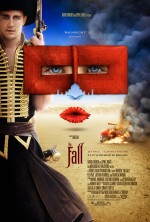
TheFallPoster.jpg

The Fall

2006 // USA - India // Tarsem Singh // June 5, 2008 // Theatrical Print

A - The Fall is a story about stories, an enchanting visual poem that honors the curious power that fiction can exert over our lives. It is a film where unexpected delights and terrors appear at every turn. Perhaps for these reasons, it is also a baffling and demented work. It is not, in any sense, an easy film. It utilizes a familiar story-within-a-story conceit, but this nested structure is not, in itself, what makes it a challenging work. Rather, The Fall asks that the viewer accept a secondary story that is surreal, volatile, and frequently campy. Meanwhile, it offers a primary story that is unrepentantly sentimental and examines themes that are stunning in their intricacy. The Fall is nothing if not ambitious, perhaps even foolhardy. It waltzes with catastrophe. It snatches dazzling success from fiasco, I think, because the filmmakers trust the viewer implicitly, never stooping to coddle or condescend. This is an unrelentingly sincere film, and unquestionably the most invigorating work of cinema I have seen this year.

The Fall opens in early twentieth century Los Angeles, although the exact year is never specified. (A title indicates that it is "Once Upon a Time," and that right there tells you everything you need to know about the film's sensibility.) A moon-faced Romanian girl named Alexandria (Catinca Untaru) is recuperating from a broken arm in a charity hospital. Alexandria is a curious and unruly child, the sort who never plays with other children and seeks out her own amusements. She always carries a wooden box full of mementos and cast-offs—the treasures of a little girl. Wandering the grounds, she encounters a heartsick silent film stuntman, Roy (Lee Pace), who is laid up with a broken leg. Alexandria and Roy strike up a friendship of sorts. The stuntman tells the girl a short story about her namesake, Alexander the Great, and then persuades her to come back the following day for a true “epic”.

The Fall intertwines the story of Alexandria and Roy in the hospital with the outlandish fantasy that Roy spins for his young listener. This tale concerns the Masked Bandit's quest for vengeance against the vile Governor Odious (Daniel Caltagirone). In the tradition of all great fantasy stories, the Bandit has a circle of colorful allies: an Indian warrior (Jeetu Verma), a former slave (Marcus Wesley), an Italian explosives expert (Robin Smith), a dreadlocked mystic (Julian Bleach), and, er... Charles Darwin (Leo Bill). Each has been wronged by Odious in some way; each craves revenge. Over the course of their mission, the allies escape from a desert island, liberate a slave caravan, and assault a palace, among other feats of daring. There's magic, romance, and lots of faceless Bad Guys. It's a classic fantasy yarn, in other words.

Sort of. Roy assembles the plot, such as it is, with a hallucinatory logic that has to be witnessed to be believed. The film's fantasy sequences unfold like a whirlwind dream, without much care for whether the viewer keeps up or finds any of it preposterous. Alexandria doesn't seem to mind, of course, and she keeps returning to Roy's bedside to find out what happens next. Roy takes a shine to her spirited nature, but he may also have other motives for weaving his tale. He needs pills to help him sleep, he explains, so that he can be rested enough to finish the story. Specifically, he needs the bottle in the dispensary labeled "Morphine."

Director Tarsem Singh (just "Tarsem" now, apparently) cut his teeth creating visually inventive music videos. However, it would be shamefully dismissive to simply wave away The Fall as a feature length indulgence of the director's MTV pedigree. Tarsem works within a distinctive aesthetic—neither a "video thing" nor a "cinema thing". It is an approach that treats every image like a tableau to be lovingly fussed over. "Phantasmagorical" seems a reasonable adjective to describe his style, but this might overstate the case. In both his first feature, The Cell, and now in The Fall, Tarsem discovered ways to circumscribe his surrealism. In The Cell, the baroque production design was limited to computer-enhanced mindscapes. Here, Tarsem indulges his taste for bizarre spectacle sans sci fi justification, but he still bounds it. The fantasy sequences in The Fall are a peek into Alexandria's mind's eye, her own moving illustrations for Roy's fairy tale.

And what illustrations they are! The story of the Masked Bandit takes place in a Near Earth, where the Stone Age abuts the Renaissance next to the Roaring Twenties. Eras and locales ooze and bubble through the film, always gorgeously realized. Tarsem has obsessed over the details of this world so that, frankly, we don't have to. He asks us to refrain from stumbling over the story's unrealities—Charles Darwin?—but to instead submit to the wonder and drama of it all, just as Alexandria does.

Borrowing a page from The Wizard of Oz, Alexandria's fantasies incorporate the people and things around her. The hospital's ice deliveryman is the slave, an orderly is Darwin, a beautiful nurse (Justine Waddell) is a damsel in distress, and the menacing X-ray technicians are Odious' legions, who yip like hyenas. For his part, Roy revises the story at whim. It morphs repeatedly as his objectives in the telling and Alexandria's wishes shift. The Masked Bandit is initially Alexandria's father (Emil Hostina), a gap-toothed farmer, but he later becomes Roy himself. Even misunderstandings are woven into the fantasy. For Roy, who makes silent Westerns for a living, the "Indian" is a Native American. But Alexandria, who has grown up among South Asian laborers in the California fruit groves and has never seen a movie, envisions that the Indian is, of course, from India.

The acting in The Fall's fantasy sequences is lusciously camp, even histrionic at times. Standing alone, the fantasy doesn't add up to much other than an hour or so of stylized excitement. Of course, these sequences don't stand alone—the story is under the control of another story. Tarsem sprinkles the tale of Alexandria and Roy with a flurry of themes. The result is a framing story as thematically rich as the fantasy tale is visually opulent. The director is manifestly fascinated with the phenomenon of storytelling. How much does authorial intent matter? Is it more important that stories fulfill or disrupt our expectations? How does a mere tall tale blossom into superstition, mythology, or even legend? Most movingly, The Fall posits that stories can facilitate connections between strangers, opening us to self-awareness and laying a foundation for love.

Untaru and Pace are the heart of this film, and they both discover portrayals that are curiously magnetic. While the dialogue in the fantasy sequences can be gleefully ludicrous at times, the scenes between Alexandria and Roy boast an unparalleled realism. It's not that they are naturalistic, precisely, but they do perfectly capture a rare thing: a completely convincing interaction between an adult and child who are not related. I cannot do these scenes justice simply by describing them. You have to see them and listen to them: the way that Roy asks Alexandria to repeat her thickly accented mumblings; the way that Alexandria's words reveal the workings of her fidgety, flitting mind; the way that their stance toward each other warms, cools, and bursts with affection from scene to scene. Having just marveled at Simon Iteanu's realistic performance in Flight of the Balloon, it's all the more delightful to witness Untaru one-up him with an even more compelling portrayal of a child. Iteanu's is probably more authentic, but Untaru conveys a searing charm that has no equal in recent films.

The Fall is a curious wonder of a film. It is melodrama, to be sure, but melodrama done artfully and earnestly. The filmmakers have given us a thing that is beautifully crafted, filled with strange sights, and obsessed with the alchemy that fiction can work on our lives. I can guarantee that some viewers will walk away from it bewildered or even embarrassed. The Fall asks that we, like Alexandria, give ourselves to a story without looking back.

PostedJune 7, 2008
AuthorAndrew Wyatt
CategoriesReviews
CommentPost a comment
FlightoftheRedBalloonPoster.jpg

Flight of the Red Balloon

2007 // France - Taiwan // Hou Hsiao-Hsien // June 2, 2008 // Theatrical Print

B - Flight of the Red Balloon is not a mystery, but it is mysterious. It is the sort of film that is difficult to dislike: commandingly acted, studded with bittersweet morsels of authentic human drama, and possessing a quiet self-assurance about its virtues. In offering a brief glimpse into the lives of a Parisian mother and son, Flight eschews Big Ideas for a convincing portrait, and along the way it evokes a powerful aura of tenderness and melancholy. Unfortunately, there is an airiness to its method that is dissatisfying, even distracting at times. Flight is not a film with a message. It seems to have no aim other than to move us, a guiltless bit of voyeurism that will echo our own recollections of childhood (or parenthood). It takes some time to adjust to the film's delicate ambitions; "Where is this going?" I asked myself more than once, and not out of excitement. Flight demands patience, but it rewards the viewer with a wealth of mood and remembrance, delivered in a handsome Gallic wrapping.

The film opens on young Simon (Simon Iteanu) on the bustling streets of Paris, calling out insistently to a red balloon that floats above him. The boy eventually loses interest and ambles on, but the balloon continues to drift through the story, as both a literal presence (often softly bumping outside a window) or as an icon invoked by the characters. Simon's mother, Suzanne—a blond, bedraggled, enticing-as-ever Juliette Binoche—has hired a new nanny, Song (Fang Song). A Chinese film student with a soft demeanor and an even softer voice, Song always seems to have a digital camcorder in hand. She is quiet, bright, wary, warm, and eager-to-please. She seems made for Suzanne and Simon.

Suzanne works in traditional puppet theater, the sort of career (and passion) that seems perfectly ordinary in the beating heart of Paris. There are glimpses of her at rehearsal, where she supplies the voice acting for the production. She squeals and bellows her way through a Chinese fairy tale with gusto, while Simon looks on, his eyes full of delight and hunger as they dart between the puppets and his mother. Simon is a sensitive, strong child with a talent for math and pinball. He never has a cross word for anyone. Song quickly sees what Suzanne knows: that Simon is a good soul, and that to treat him with affection is as natural as breathing.

Strictly speaking, Flight of the Red Balloon has only the thinnest plot. Mostly, ordinary things happen. The story elements are related in a way that mimics the nebulous quality of real life, where burdens and pleasures rub shoulders. Song films Simon with her camcorder, mentioning her interest in Albert Lamorisse's 1956 short film, The Red Balloon. Simon has a piano lesson in the apartment downstairs. Suzanne, who owns the building with her ex-husband, is incensed with the neighbors. They haven't paid any rent in a year, and she talks to a lawyer about how to evict them. Song gradually becomes an essential part of the household. She helps Suzanne transfer her family's 8mm tapes to video, and translates when Suzanne hosts an esteemed Chinese puppet master. There are meals and harried phone conversations. Outside, the red balloon floats on.

Flight of the Red Balloon drifts along at is own pace. It hovers over its scenes, absorbing everything that is said and unsaid. The film then flies ahead, time passing in skips and leaps. Flight is mostly chronological, with the occasional flashback sighting of Simon's older sister Louise, now away at school in Brussels. Director Hou Hsiao-Hsien captures many scenes in long, unbroken shots, the frame edging back and forth to follow movement and conversation. There is an appealing understatement to these ambitious scenes. The challenge inherent in them only becomes apparent later, a sort of quiet complement to Children of Men's hold-your-breath set pieces. (Is it coincidence that a poster for Alfonso Cuarón's science fiction thriller has a cameo here?) In Flight, these long takes lend the film a naturalism that sharpens its emotional power.

Suzanne, like the film, is always in motion, even if it is only to pace anxiously, her straw-colored hair perpetually tousled. She bounces from one responsibility to the next. "Why are you always so busy, Mama?," asks Simon. "Because I have many things to do," is the reply, as if this were the most obvious thing in the world. Flight is no melodrama about parental neglect or broken homes. Simon does not seem unhappy (for now) despite the long gulfs of inattention, and Suzanne's love for her boy is never in doubt. Song senses the strength in their relationship, and seems content to stand outside of it, feeling its warmth as a friend to both mother and son.

What is Hou doing here, exactly? Flight seems to be striving singularly for a naturalistic depiction of a family. There is drama, certainly, in Suzanne's emerging struggle with the tenants, a conflict connected to the absent husband and daughter. However, Hou isn't especially committed to these aspects of the story. The events that unfold in Flight primarily serve to highlight, to varying degrees, the essence of the relationship between mother and son. It's an appealing approach to the material, and one that is executed with grace. Still, there is a puffy remoteness in the film's stance towards its own story. It is so self-consciously not about the deadbeat tenants or the puppet show or the piano movers that it keeps the viewer at a distance. Flight also suffers from Hou's occasional flirtations with bloated, arty indulgence. (Hey, another sixty second tracking shot of a red balloon floating through Paris!)

It's a testament to the marvelous performances from Binoche and Iteanu, then, that Flight still strikes deeply resonant chords of human sentiment. Binoche is riveting, recalling how she shaped and then dominated the best scenes in Caché. She has the rare sort of screen presence that allows her to convey seemingly contradictory qualities: sexy and haggard, waspish and vulnerable, adoring and aloof. Iteanu is equally amazing, delivering the most convincing child performance of the year. He speaks, walks, and fidgets as a child his age would naturally, and conveys the exact way that young boys brood and gawk. Not to be overlooked is Fang, who is crisply aware of her character's position as both a friend and The Help. Watch her carefully while Suzanne confers with a lawyer or bickers on the telephone; Fang is passive, yet clearly always listening, sometimes with carefully concealed anxiety.

Almost all the scenes in Flight of the Red Balloon include Simon in some way. Although he is not always at the center of the action, he is usually present, even if only as a quiet observer. For me, the film's curious style snaps into sharper focus if it is approached as a scrapbook of Simon's memories, vignettes remembered from this specific time when his mother wrestled with a crisis and a new friend entered their lives. Hou hints as much, particularly in the select moments where Simon is absent. In one moving scene, Suzanne reminisces about a cherished Chinese postcard, and how it always summons memories of her college days. And yet she gives the postcard as a token of gratitude to the old puppet master. Later, she shows Simon one of the restored, silent 8 mm movies featuring footage of her grandfather, also a puppeteer. What are they saying, asks Simon? Suzanne doesn't know, so she makes up her own words. The words don't really matter. The feeling of that relationship—the beauty of it, the pain of its loss, the value of remembering it—doesn't need to be fabricated.

PostedJune 3, 2008
AuthorAndrew Wyatt
CategoriesReviews
1 CommentPost a comment
Newer / Older
RT_CRITIC_TM_BADGE.jpg
The Take-Up Podcast

Twin Peaks: The Return

2007 - 2016: A Personal Cinematic Canon

download.png

Recent Posts

Blog
New Reviews at The Take-Up
about 8 years ago
Miles to Go Before I Sleep
about 8 years ago
Delete Your Account: 'Friend Request'
about 8 years ago
Feminine Mystique: 'mother!'
about 8 years ago
Unmuffled Screams and Broken Hearts - 'Twin Peaks: The Return,' Parts 17 and 18
about 8 years ago
Send in the Clown: 'It'
about 8 years ago
Unmuffled Screams and Broken Hearts - Twin Peaks: The Return, Part 16
about 8 years ago
Fetal Infraction: Prevenge
about 8 years ago
You Don’t Know Why, But You’re Dying to Try: The Lure
about 8 years ago
Unmuffled Screams and Broken Hearts - Twin Peaks: The Return, Part 15
about 8 years ago

© 2007 – 2026 Andrew Wyatt