Blog
About
Indices
Films by Title Gateway Cinephile Posts by Date The Take-Up and Other Posts by Date Horror Cinema David Lynch's Shorts John Ford's Silents H. P. Lovecraft Adaptations Twin Peaks: The Return Westworld Freeze Frame Archive
What I Read

Gateway Cinephile

Appreciation and Criticism of Cinema Through Heartland Eyes
Blog
About
Indices
Films by Title Gateway Cinephile Posts by Date The Take-Up and Other Posts by Date Horror Cinema David Lynch's Shorts John Ford's Silents H. P. Lovecraft Adaptations Twin Peaks: The Return Westworld Freeze Frame Archive
What I Read
TheHangoverPoster.jpg

The Hangover

2009 // USA // Todd Phillips // December 24, 2009 // DVD - Warner Brothers (2009)

B- - Although hardly the Second Coming of raunchy comedies that the hype suggested, The Hangover establishes that the "lost night" high concept can work when executed with sufficiently nasty enthusiasm and held aloft by a cast willing to fritter around in its weirder crannies. Call it Dude, Where's the Groom? Director Phillips and writers John Lucas and Scott Moore at least understand the appeal of their pseudo-detective story conceit. They maintain the focus on delivering unexpected gags right to the end, at which juncture nearly every plot point clicks into place. (Very, dare I say, Shakespearean, that.) Frequently, the laughs the films coaxes are guffaws of sheer disbelief, whether from a teacher swiping kids' field trip money for the casino tables, or a naked Chinese gangster popping out of a car trunk. The cast keeps things afloat, especially Ed Helms in clueless square mode and Zach Galifianakis' unexpectedly effective space cadet shtick. Too often, however, The Hangover errs on the side of gleefully gratuitous slapstick, when it isn't indulging in sexist twaddle. Helms' ludicrously shrewish wife in particular is an offensive bit of caricature that serves as a convenient straw-woman for the film's stale, contemptuous "Let Boys Be Boys" ethos.

PostedDecember 27, 2009
AuthorAndrew Wyatt
CategoriesQuick Reviews
CommentPost a comment
TerminatorSalvationPoster.jpg

Terminator Salvation

2009 // USA // McG // December 18, 2009 // DirecTV On-Demand

C- - Just as Nick Stahl's skittish, fatalistic John Connor fit Rise of the Machines' ferocious rush towards a bleak future, a zealous yet cynical Christian Bale—plagiarizing his Batman growl—suits Terminator Salvation's gritty realization of that future. This, and the admittedly seamless visual effects, is about the only thing that McG's distressingly rote sequel gets right. This outing's central conceit—SkyNet has spawned an experimental half-human, half-machine abomination (a rugged, essentially charmless Sam Worthington)—isn't remotely meaty enough to sustain a feature film. The story is as limp as a noodle, but even as a mindless science-fiction actioner, Salvation fumbles. At about the halfway point, McG trades genuinely frightening early set pieces for dull sensory incoherence. Blessedly, it's not the nerve-frying visual lunacy of a Michael Bay film, but just the undistinguished smash-bang nonsense that has characterized vast swaths of the past two decades' action films. That such mediocrity has befallen that Terminator saga is all the more frustrating given that the film-makers are clearly besotted with the previous films, loading Salvation with references and homages that range from the blatant to the clever. If only fanboy enthusiasm alone were sufficient to conjure a good film.

PostedDecember 22, 2009
AuthorAndrew Wyatt
CategoriesQuick Reviews
2 CommentsPost a comment
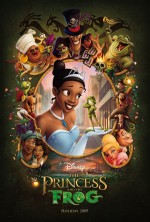
PrincessandtheFrogPoster.jpg

The Princess and the Frog

Once Upon a Time, In a Place Called "Crescent City"...​

2009 // USA // Ron Clements and John Musker // December 13, 2009 // Theatrical Print (AMC West Olive)

B - It's been five years since Disney Animation Studios has produced a narrative feature that was at least partly hand-drawn, and longer than that since the venerable House of Mouse's roughly annual doses of animated cheer could be regarded as unique cinematic events. (1999's Tarzan being the last triumph by my reckoning.) It's not surprising, then, that The Princess and the Frog is being trumpeted by the studio itself as a kind of overdue return to form. In the wake of forgettable computer-generated mediocrities such a Chicken Little and Meet the Robinsons, there is a steely logic in Disney's decision to abandon its anemic Pixar apings and instead pursue films created according to the template of its successful Renaissance features. Indeed, TPatF possesses all the hallmarks of the studio's 1990s films: hand-drawn animation embellished with dazzling visual effects; Broadway-style musical storytelling; a young, appealing protagonist; goofy comic relief characters; and simplistic moral lessons. Perhaps it's the long absence of that Disney Magic(TM)—benign, kid-friendly entertainment executed with stunning visual achievement—that makes that familiarity work so well in The Princess and the Frog. Certainly, there's very little that's unexpected in Ron Clements and John Musker's Jazz Age fairy tale. However, there's also nothing wrong with following a formula when the result is so gorgeous. Just as Pixar has established itself as preeminent purveyor of children's fare that is thematically richer and more downright cinematic than most "adult" features, Disney Animation Studio once made unbearably lovely moving picture books, far lovelier than their often crude stories or questionable politics warranted. Perhaps the highest praise one can offer The Princess in the Frog is that it reignites that latent tradition with enthusiasm and boundless affection for its forebears.

The original Frog Prince fairy tale, as told by the Brothers Grimm, is thin gruel for a feature-length film. (It doesn't even include a kiss!) Accordingly, Clements, Musker, and co-writer Rob Edwards have taken the story's popularly understood premise—a prince is cursed with the form of a frog until he is freed by a princess' kiss—and transformed it into a brisk, voodoo-touched tale of 1920s New Orleans. While Disney has previously shaded their fantastical settings in different ways, TPatF is the closest the studio has ever come to attempting a "modern dress" version of a fairy or folk tale. And, truth be told, it works astonishingly well, partly because the film-makers exhibit such obvious adoration for the city's unique sights, sounds, and tastes, partly because they ground every inch of their story in the New Orleans' unique milieu (even if it is ultimately a Disneyfied version of the city). Far from serving as arbitrary window dressing, Clements and Musker's selection of time and place is woven into the narrative quite adroitly, right down to a cunning little conceit regarding a princess (of sorts) and a midnight deadline.

As a feature explicitly designed to fit into Disney's "Princess film" stream—a cynically retroactive bit of branding if there ever was one—TPatF accordingly boasts a young, beautiful, female protagonist, but she is without a doubt one of the most well-rounded such characters in Disney history. She is also black, a fact that has been difficult to miss given the past year's worth of hubbub about the film, some of it no doubt of the self-congratulatory sort. No matter. Whether Tiana (Anika Noni Rose) originated as a bit of niche marketing or not, she is a wholly appealing character on the screen, treated with the sort of care and warmth that few Disney heroes are afforded. To be sure, the film tiptoes gingerly around matters of race, as much as any fantasy set in early twentieth century American South can. The closest the film gets to stepping directly on that particular hornet's nest is a lawyer's comment to Tiana about "someone of your background." Still, to this white viewer, TPatF threads the race needle quite well, acknowledging racial disparities while maintaining an appropriately storybook tone, and giving black characters prominence without resorting to caricature. The film does sometimes shy away from context a bit too determinedly—there's no hint as to why Tiana and her family live in a shack while her white friend Charlotte (Jennifer Cody) lives in a mansion—but this is an animated children's musical, and perhaps we can only ask so much.

More refreshing than its respectful yet velveteen approach to race is the film's treatment of gender, for here we have the culmination of the self-critique that Disney began and fumbled somewhat in Enchanted. Charlotte, for all that she is presented as a lovable and loyal friend to Tiana, is unmistakably a buffoonish character, and it's therefore notable that her most dominant personality trait is her obsession with living out the dream of a fairy tale princess, especially the part about marrying a prince. Indeed, Charlotte is for all practical purposes a joke at the expense of the very same pig-tailed mini-consumers that Disney itself has nurtured. Whether one finds this cheaply reflexive is a matter of taste, but it's notable that Charlotte, for all her spoiled, dimwitted vanity, is never presented as a bad person. She serves mainly to contrast with Tiana, a young woman defined by her strong work ethic and independence. Tiana's fondest dream is to open an elegant restaurant in the Big Easy; finding a man isn't even on her radar. Remarkably, Clements and Musker present a fairly grounded rebuke to Disney's own ethos of effortless miracles. In a gentle prologue, young Tiana's father (Terrence Howard) explains that wishing for something is all well and good, but you have to apply yourself to achieve what you want. These gestures add up to make TPatF the most enlightened Disney animated feature in decades, perhaps ever. That's faint praise given the studio's conservatism, but it's nonetheless an invigorating thing to see it unfold.

The prince of this tale is Naveen (Bruno Campos), the arrogant, shiftless, but generally good-natured scion of a fictional Mediterranean kingdom. Besotted with women and American jazz, Naveen has been cut off from his parents' fortunes, and is on the prowl for a rich socialite. Naturally, Charlotte, as the only daughter of the fabulously wealthy Big Daddy La Bouff (John Goodman), fits the bill nicely. Unfortunately, Naveen falls into the clutches of a malevolent voodoo priest, Dr. Facilier (an exquisite Keith David), who transforms the prince into a frog and Naveen's venal porter Lawrence (Peter Bartlett) into the prince's double, putting into motion a plan to seize Big Daddy's millions. Things go from bad to worse at a costume gala in the prince's honor, where Naveen, having escaped from Facilier's clutches but still trapped in his amphibious form, runs into Tiana. Mistaking her for a princess and presuming that the famous fairy tale had things right, Naveen coerces a kiss from her. Unfortunately, Tiana discovers that kissing a cursed prince when you aren't a princess only spreads the curse like a virus, and she too finds herself green and web-footed. The pair escape into the bayou and from there the film takes on a familiar shape, as they pick up a couple of comic relief companions and make their way to the voodoo priestess Mama Odie (Jenifer Lewis) in search of a cure.

The character designs are all distinctive and pleasing, especially Tiana herself, who is easily the most appealingly drawn and animated Disney female since Beauty and Beast's Belle. Rose's performance fits the character snugly, lending an authenticity to her sharp personality and slightly restrained emotions that few animated characters can boast. In frog form, Tiana and Naveen are much more simply designed, but the simplification works well, especially for Naveen, who roguish qualities actually seem enhanced by the transformation. The film-makers utilize a much more cartoonish look for Louis (Miachel-Leon Wooley), an alligator with ambitions as a jazz trumpeter, and Ray (Jim Cummings), a Cajun lightning bug, but this is to be expected given that they are the film's designated comic relief. However, in any Disney animated feature the standout character is inevitably the villain, and Dr. Facilier is no exception. The lanky, silken Facilier is not an overtly comic nasty like Aladdin's Jafar, but neither is he so manifestly lethal as, say, Sleeping Beauty's Malificent. With his skull-and-bones-bedecked top hat and handful of tarot cards, he's every inch the Hollywood conception of a vodoun bokor, but it's the little details of his design that stick, such as his white spats, conspicuous tooth gap, or the stray curl of oiled hair. Veteran screen and voice performer David delivers a marvelous turn, and the writers cunningly emphasize the curiously transactional nature of Facilier's black magic.

Strictly as a example of contemporary "traditional" animation, TPatF is stuffed to bursting with wondrous sights. Every inch of the film drips with dazzling design, lovingly rendered landscapes, and sumptuous lighting. It's simply a drop-dead gorgeous film, and if that only counts for so much in cinema, it counts for quite enough when it's done as well as this. Clements and Musker can boast at having delivered the most beautiful work of hand-drawn feature animation since, well, Tarzan, which I suppose means that TPatF does indeed signal a Second Renaissance for the House of Mouse. The musical numbers in particular showcase some of the film's best moments: the dizzying whorls of fireflies in "Gonna Take You There"; the day-glo voodoo nightmare of "Friends on the Other Side"; and, most memorably, an art deco cut-out fantasy in "Almost There". Randy Newman's songs, which appropriately sample jazz, gospel, and zydeco influences, aren't particularly memorable, in that you don't come out of the theater humming them. Yet if there's no obvious "Be Our Guest" or "Hakuna Matata," neither is there a clunker in the bunch, and for a notoriously musical-phobic viewer such as myself, that's saying something.

The Princess and the Frog is, in most ways, a utterly benign and conservative piece of film-making. It hews closely to the conventions of every animated musical fairy tale that has gone before, and in those places where it shyly steps into the twenty-first century, the move has been long overdue. What sets it apart from the junk food that passes for much children's animation is the absence of anything disposable or perfunctory about it. Clements and Musker and the dozens of animators and writers that labored on it have delivered a straight-up beautiful thing within a mode of film-making that has suffered devastating erosion in the past decade. To be sure, TPatF isn't thematically ambitious, but it is plainly a work of deep love, and it wants us to love it too. The film succeeds in this endeavor by mating exquisite visual artistry with the warm, undemanding fuzziness of a fairy tale. That, more than anything, was what characterized Disney Magic(TM), and it's what makes The Princess and the Frog such a delectable comeback.

PostedDecember 16, 2009
AuthorAndrew Wyatt
CategoriesReviews
CommentPost a comment
TheRoadPoster.jpg

The Road

Here at the End of All Things

2009 // USA // John Hillcoat // December 3, 2009 // Theatrical Print (Landmark Tivoli Theater)

B - Much of the unexpected power of No Country For Old Men arrives in its final fifteen minutes or so, as an arguably perfect thriller evolves into a profoundly moving rumination on justice, ethics, and, most devastatingly, the role of parents as surrogate gods in a cold, empty world. These themes are front-and-center in The Road, based on the Pulitzer Prize-winning novel by No Country author Cormac McCarthy. The film adaptation of The Road veritably howls the despairing thoughts that Sheriff Ed Tom Bell only murmured. I'm reluctant to criticize director John Hillcoat—whose previous film was the spit-and-gristle Aussie Western The Proposition—for the film's bracingly straightforward treatment of its central concern: namely, the deity-mortal corollaries in the parent-child relationship. Bracingly straightforward, after all, is McCarthy's preferred approach in his novel, and Hillcoat's film is nothing if not a remarkably faithful preservation of both the letter and spirit of the source material. Accordingly, what The Road delivers is one of the grimmest, bleakest, most emotionally draining stories in contemporary narrative fiction. It is not, needless to say, a corking good time at the movies. It is, however, a poignant, sharply realized work that starkly tackles moral dilemmas that have troubled humanity for millennia.

The potency of The Road lies within its central visual: a man (Viggo Mortensen) and a boy (Kodi Smith-McPhee), bedraggled and malnourished, trudge through an ashen wasteland pushing a shopping cart that contains their meager possessions. The Man and Boy (they are never given names) are nomads in a lifeless wilderness that was once the United States of America. Ten years ago, there were booming sounds, a flash of light, and fires that burned through the night. The precise nature of this apocalypse doesn't really matter, either to the scattered survivors or to the story that Hillcoat is striving to tell. For a decade, the world has slowly been dying. The sky is perpetually overcast, plant and animal life have nearly vanished, and most of the remaining humans have turned to roaming the highways in armed, cannibalistic gangs. The Boy, who was born shortly after the world changed, has known only this benighted existence. His mother, the Man's wife (Charlize Theron) is gone now, her despair prompting her to choose death in the darkness over rape and murder at the hands of others.

Despite appearances, The Road is not any sort of dystopian action-adventure film. Most of its narrative is occupied with the quiet banalities of the Man and Boy's search for food, and occasionally with their evasion of other survivors. Yet Hillcoat nonetheless maintains a sense of urgency and desperation, calling to mind the tone of a gritty escape picture... except in this case there is nowhere to escape to. There is only the Man's anxious need to keep moving, always south and towards the coast, for no particular reason other than to avoid the risks of remaining in one place for too long. Even in such unremittingly desolate circumstances, the Man believes it is vital to teach his son something like a moral code, to distinguish the Good Guys like themselves from the Bad Guys that wander the wastes with minds full of hunger and murder. The ethical dialog between Man and Boy, and how it ricochets off the people and situations that they encounter, comprises both the film's character development and its out-in-the-open exploration of theme.

The apocalypse that The Road envisions is admittedly contrivance. It sweeps away the accumulated bullshit of civilization by, well, just sweeping it away, and then poses fundamental questions of human morality in the most visceral terms possible. What does it mean to be good? How much do suspicion and cynicism limit our opportunity to help others? How do our words and actions convey our values to the next generation? This frankness to the film's purpose might have been off-putting, especially given that the scenario it presents is one that is utterly without hope. (Give it a moment's consideration and it becomes apparent that humanity will necessarily go extinct as the last morsels of preserved food are scavenged.) Hillcoat, however, discovers the invigoration and sorrowful fascination inherent in a story stripped down to its most elemental components. And narratives don't get more elemental than A Father and Son Try to Survive.

The Road is not really a science-fiction film, if only because the nitty-gritty details of its apocalyptic event are completely ignored. Yet it fulfills one of the essential criteria of speculative visions of the future, in that it uses its setting to explore contemporary mores. It's readily apparent that Hillcoat, absorbing and utilizing the creased cynicism of McCarthy's novel, intends that The Road not really be taken as a story of The Future at all, but as a timeless tale of the struggle against moral darkness and the essential role of the parent-child relationship in that struggle. The not-so-subtle implication is that The Road's nightmare world of blight and brutality is only a slight exaggeration of the world we are dwelling in right now. This notion lurks in the picture, but it never presses itself upon the viewer, partly because the Man and Boy's plight is so immediate, partly because Hillcoat paints such a dire landscape with such believability. It's a world of perpetual, ash-flecked winter, the miserable punchline to civilization. The blasted environs of Mount St. Helens and the Hurricane Katrina-lashed Gulf Coast stand in for this crumbling world, but you'd never know it. It's in the obvious computer-generated shots that the illusion frays.

The Man is the sort of role that Viggo Mortenson excels at, and it's difficult to imagine the film, for all of Hillcoat's capable craftsmanship, functioning even remotely as well without him. Mortenson is able to hold resolve and self-doubt in a character at the same time, and here he puts that skill to great effect. He has the ability to portray paternal devotion with unashamed white-hot purity, without rendering it schmaltzy. When he whispers to another traveler of uncertain intentions, "This boy is my god," we don't doubt him for a second. One can't blame Mortensen for the slightness that clings to the film, its searing emotional content notwithstanding. It's not that Hillcoat's treatment of the story is precisely perfunctory, but that he doesn't enliven its dismal and straightforward parameters with the artistic deftness necessary to lend it a a greater thematic or psychological intricacy. The Road's success thus rests primarily on its precisely drawn premise and the uncluttered and emotionally forthright execution of that premise.

PostedDecember 5, 2009
AuthorAndrew Wyatt
CategoriesReviews
5 CommentsPost a comment
PreciousPoster.jpg

Precious

2009 // USA // Lee Daniels // December 1, 2009 // Theatrical Print (St. Louis Cinemas Moolah Theater)

B- - It's tempting to dismiss Lee Daniels' Precious as a miserablist ordeal that puts its protagonist—the obese, illiterate teenage mother whose name serves as the title—through the proverbial wringer in order to elicit vague guilt and sanctimonious tongue-clucking from its audience. The film leans heavily on the conventions of ghetto melodrama, but Precious is both too slight and too poetic to permit hasty categorization. There's a tinge of knowing fatalism to the film's despair, no doubt derived in part from the real-life experiences woven into Sapphire's original novel. Daniels flits between a dizzying array of social and cultural issues, but Precious retains an unsettled, even impressionistic tone that prevents it from descending into preachiness. The film's formalist flourishes—such as Precious' (Gabourey Sidibe's) gauzy fantasies of fame and fortune, or the unexpected use of gospel and R&B to add a fresh twist to familiar narrative situations—mute the asphalt horror and lend credence to the film's fuzzy, humanistic message. While it's Sidibe that provides the film with its restless, wounded mood, it's hard to deny that, Oscar-bait or not, there's something mesmerizing about sassy comedian Mo'Nique portraying one the most blisteringly vile mothers since Shelley Winters in A Patch of Blue.

PostedDecember 3, 2009
AuthorAndrew Wyatt
CategoriesQuick Reviews
1 CommentPost a comment
FantasticMrFoxPoster.jpg

Fantastic Mr. Fox

Crazy, Just Like Me

2009 // USA - UK // Wes Anderson // November 29, 2009 // Theatrical Print (St. Louis Cinemas Chase Park Plaza Cinema)

B+ - Wes Anderson's distinctive authorial signatures—the fussy, nostalgia-rich production design, the playful movements of his camera, the droll labeling of chapters and even shots—has at times been derided as a dollhouse aesthetic, more suited to playthings than real people. It's not a criticism I share, but there you have it. One might say that Anderson's latest feature, Fantastic Mr. Fox, responds to such objections by taking them at face value, as it was made using literal dolls. Well, stop-motion puppets, to be precise. A more natural fit between a particular style of animation and a living auteur would be hard to imagine, as Anderson's propensity for treating every shot as a tableau is given its most ebullient expression yet. There's something damn near perfect about the marriage of Mr. Fox's old-school animation—which heartily embraces an aura of toybox unreality—to the director's natural affinities. Anderson is an artist who thrives on meticulous attention to detail and on making every shot count, and animation provides ample opportunity to indulge such impulses.

Adapting Roald Dahl's slim children's novel of the same name, Anderson and co-writer Noah Baumbach necessarily expand the original tale of chicken thievery and vengeful farmers. The film bestows more human qualities on Dahl's animal characters, constructing a whimsical rural landscape where adult foxes wear suits and write newspaper columns and young foxes go to chemistry class and play Whackbat. (This is a cricket-like game played with a flaming pine cone, whose complexity amusingly and quite deliberately surpasses that of Harry Potter's quidditch.) Mr. Fox's characters might speak with American accents, but the clear template for Anderson's approach to his anthropomorphic animals is The Wind in the Willows. However, the mysticism and class allegory in Grahame's story is swapped for a distinctly American strain of ambition and discontent, and if there's one thing that Anderson knows how to do well, it's portraying talented yet dissatisfied people (or foxes, in this case).

We learn in a prologue that Mr. Fox (George Clooney) is a skilled and irrepressible thief whose exploits have a habit of getting him and his family into hot water. Having been convinced by his wife (Meryl Streep) to give up poultry purloining several fox-years ago, Fox declares that he wants to move out of their earthen den and into a picture-perfect hilltop tree. That said tree overlooks the wealthy farms of the nasty Misters Boggis, Budge, and Bean (one fat, one short, one lean) doesn't really register with Mrs. Fox. That is, until her husband starts sneaking out with Kylie the Opossum for nighttime raids and the cupboard inexplicably starts filling up with chickens, geese, turkeys, and cider. Eventually the farmers, goaded by the especially unpleasant Bean (Michael Gambon), declare war on the foxes, and a tale of escalating hostilities between men and pest ensues. Along the way, there are several sub-plots, among them the rivalry that develops between Fox's sour, diminutive son, Ash (Jason Shwartzman) and his visiting cousin, the all-around prodigy Kristofferson (Eric Chase Anderson).

The Fox family dwells in a marvelous, autumnal-hued landscape of vast skies and rolling hills, reminiscent of a stylized oil painting. Anderson constructs this postcard pastoral setting for its superficial aesthetic charms, not because he's especially enamored with its ideals. His film's farmers are not rustic men of the soil, but heartless titans of a modern, mechanized agribusiness, more prosperous kin to Chicken Run's Mrs. Tweedy. Some class- and race-tinged allusions aside, however, Mr. Fox is chiefly concerned, as all of Anderson's films are, with personal drama, most especially familial relationships and the reconciliation of desires with reality. Here that latter theme dovetails slyly—though not always elegantly—with the animal characters' struggles with their wild natures, a problem given its most succinct expression by the hero himself: How can a fox ever be happy without a chicken in its teeth? The profundity of this statement might be dubious, but Mr. Fox is ultimately less concerned with messaging than amusement, and one senses than Anderson derives a great deal of amusement out of hearing such familiar navel-gazing statements issue from a fox's mouth.

Indeed, what separates Mr. Fox from the rest of Anderson's output is not its conspicuous animation technique, but its decidedly light tone, even in its gravest moments. (A favorite line: "At the end of the day, he’s still just another drowned rat in a dumpster behind a Chinese restaurant." This is delivered not as a howl of existential despair, but a gag at the expense of the film itself.) If Mr. Fox feels a tad trifling, it's because Anderson aims to tell a silly little story with such absolute precision, all while winking at us as if to say, "Relax, it's just a silly little story." The model trains that clatter through the film hint at the film's joyous tone and the director's self-awareness. Like a real-world train enthusiast, Anderson is eager for us to coo with delight at the dense texture of his fuzzy little world, but he never loses sight of the fact that he cares about its minutiae much, much more than we do. Mr. Fox is one of those rare films that feels like a painstaking labor of love for its creator, while only needing to be liked by its audience.

Much will be written about the look of Mr. Fox, with its impossibly detailed design and herky-jerky movements, which brings to mind the Rankin/Bass animated holiday specials. (Anderson, whose soundtrack choices always work more by intuition than logic, even alludes to Rudolph the Red-Nosed Reindeer by including a couple of Burl Ives tunes.) Suffice to say that the film has forsaken realism for an appealing tangibility, practically inviting the viewer to reach out and stroke its character's fur or fiddle with its miniature bric-a-brac. If only 2009 hadn't also given us Henry Selick's overlooked masterpiece, Coraline, then this would be the best stop-motion feature film in years. The perfection of Coraline's gothic world is a hard act to follow, and Mr. Fox too willfully clings to its artificiality to surpass that film's sheer dazzle.

Although the source material is a children's classic, I hesitate to label Mr. Fox as a children's film. To be sure, at the screening I attended, all of the young audience members were transfixed, with barely a peep of discontent or boredom to be heard. Unless you regard drinking and smoking characters as too much for young eyes to handle, Mr. Fox is determinedly kid-friendly. One of the film's most memorable touches is its substitution of "cuss" for swear words, a gag that almost, but never quite, wears out its welcome. (I defy any adult not to titter at the phrase "clustercuss".) However, this bit of dialog tomfoolery hints that the film's primary audience is adult. While there is some cartoon slapstick, Anderson and Baumbach prefer the dry, character-centered humor that has come to characterize the former's films.

The Andersonian approach to character is in evidence throughout Mr. Fox, and while the heroes' tribulations seem less dire by dint of the fact that they are animated animals, the telltale longing and sadness are still there. The Ash-Kristofferson subplot in particular operates within the male-male rivalry framework the director favors, but it's also one of the weakest examples of such within his filmography, and the film's most unsuccessful dramatic note. However, what is most conspicuous is not the film's potency or lack thereof but the odd fit between its sensory delights and its thorny emotional landscape. (How many other alleged children's films would dare feature the line, "I love you, but I never should have married you." And then just leave it out there?) These elements are never completely at ease with one another, save perhaps in an unusual scene late in the film, one filled with a profound melancholy that is inexplicable but wholly right.

It's easy to declare that the undeniable visual artistry of Fantastic Mr. Fox reveals that the director has always been less a film-maker than a poser of action figures. Yet far from revealing the shallowness of Anderson's emotional understanding, the winsome pleasures of Mr. Fox throw fresh light on the essential humanity of the director's films, especially Rushmore and the underrated The Darjeeling Limited. In creating a fluffy fairy tale—a little starched and a little sad, as only he can do it—Anderson underscores his characters' egotistical need to control their environments, while simultaneously acknowledging how much fun it can be to fashion one's own little world.

PostedNovember 30, 2009
AuthorAndrew Wyatt
CategoriesReviews
3 CommentsPost a comment
Newer / Older
RT_CRITIC_TM_BADGE.jpg
The Take-Up Podcast

Twin Peaks: The Return

2007 - 2016: A Personal Cinematic Canon

download.png

Recent Posts

Blog
New Reviews at The Take-Up
about 8 years ago
Miles to Go Before I Sleep
about 8 years ago
Delete Your Account: 'Friend Request'
about 8 years ago
Feminine Mystique: 'mother!'
about 8 years ago
Unmuffled Screams and Broken Hearts - 'Twin Peaks: The Return,' Parts 17 and 18
about 8 years ago
Send in the Clown: 'It'
about 8 years ago
Unmuffled Screams and Broken Hearts - Twin Peaks: The Return, Part 16
about 8 years ago
Fetal Infraction: Prevenge
about 8 years ago
You Don’t Know Why, But You’re Dying to Try: The Lure
about 8 years ago
Unmuffled Screams and Broken Hearts - Twin Peaks: The Return, Part 15
about 8 years ago

© 2007 – 2026 Andrew Wyatt